 Click Here to View Your Vacation
Scandinavia & Baltic Capitals



Viking | 15 Days | Oslo to Copenhagen
May - August 2028 Departures
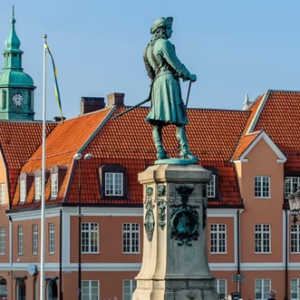
Trace the shores of the Baltic Sea to discover magnificent fjords and bustling cities. Call at UNESCO-listed cities and get a glimpse into the area’s medieval past in the old towns of Tallinn and Riga, and Karlskrona’s historic port. Witness the natural splendor of the Åland Islands, an archipelago of more than 6,500 isles. With overnights in the vibrant capitals of Sweden and Denmark, delve deeper into the region’s rich heritage and Viking legacy.
AAA Member Benefits and Special Offers:
- Member Benefits
- Up to $200 per person shipboard credit
Call to Book
1-800-529-3222
Included With Your Trip
Viking Inclusive Value
- One complimentary shore excursion in every port of call
- Free Wi-Fi (connection speed may vary)
- All onboard meals, featuring regional specialties & always available classics
- Beer, wine & soft drinks with onboard lunch & dinner
- 24-hour specialty coffees, teas & bottled water
- Port taxes & fees
- Ground transfers with Viking Air purchase
- Visits to UNESCO Sites
- Enrichment lectures & Destination Performances
- Complimentary access to The Nordic Spa & Fitness Center
- Self-service launderettes
- Alternative restaurant dining at no extra charge
- 24-hour room service
Additional Information
Day 1: Oslo, Norway
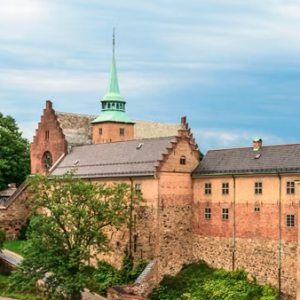
Embark your ship and settle into your stateroom. Oslo is one of Scandinavia’s most vibrant cities. Situated along the stunning Oslofjord and famed for its rich Viking heritage and maritime industries, it was founded by Norse King Harald III in 1040. The city is centered around the lively waterfront district, featuring a backdrop of forested hills and architectural gems, including the Oslo Opera House and the Munch Museum. Several other notable museums celebrate Oslo’s cultural treasures; perhaps the most renowned, the National Museum, is home to the largest collection of public paintings in Scandinavia.
Day 2: Gothenburg, Sweden
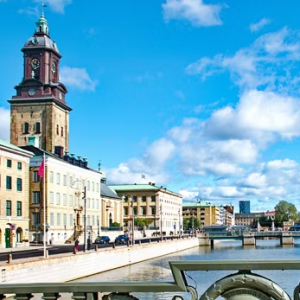
Gothenburg is a thriving university town of picturesque canals, parks and gardens. Founded under a royal charter of Swedish King Gustavus Adolphus II in 1621, it grew into a major port. In the 18th century, the city prospered from the trade of the Swedish East India Company. That successful period is reflected in the stunning neoclassical stone houses that remain around the city’s canals. Today, a maritime and mercantile past is visible in Gothenburg’s cultural institutions, from the Gothenburg Museum of Art’s paintings to the several museums of navigation and seafaring.
Day 3: Copenhagen, Denmark
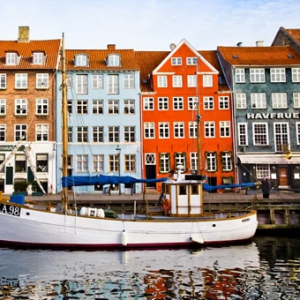
Copenhagen charms visitors like a Danish fairy tale. Among the Baltic’s most beautiful cities, it began as a fishing village and boasts more than 850 years of history. It has been an important Scandinavian port since the Viking Age and remains one of Europe’s most enchanting places, thanks to Tivoli Gardens, the world’s second-oldest amusement park, andThe Little Mermaid statue sitting in the harbor at Langelinie. Grand palaces also grace the cityscape, including Amalienborg Palace, the royal winter residence, and Rosenborg Castle, home to the Danish Crown Jewels.
Day 4: Karlskrona, Sweden
Founded by Charles XI in 1860, Karlskrona is a fine example of Sweden’s Renaissance-style architecture. The Admiralty Church, built in 1685, is one of the town’s prominent buildings, and the town’s wooden church is the largest in Sweden. Karlskrona’s maritime history can be seen throughout; it is a base for the Swedish Navy and its port was awarded UNESCO world Heritage status in 1998. The Naval Museum showcases the port’s history and its exhibits include a submarine. The nearby Kungsholm Fortress is the world’s oldest fort still in operation today.
Day 5: Gotland (Visby), Sweden
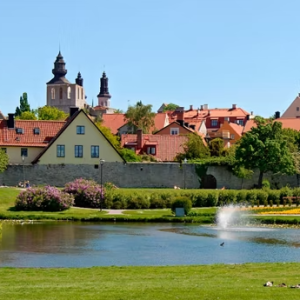
Much of Gotland’s landscape dates to the 6th century, when Vikings dominated the island. More Viking relics have been uncovered here than anywhere else in Sweden, making it a treasure trove of the era. Its strategic location bolstered the local economy when merchant ships of the Hanseatic League docked here for provisions or for trading. Visby grew into the most important city of the League, surpassing even Bergen in significance. Its two miles of defensive walls and 44 watchtowers are among the most remarkably preserved in Europe.
Day 6: Mariehamn, Åland Islands
The Swedish-speaking city of Mariehamn is the capital of Åland, an autonomous territory under Finnish sovereignty. The archipelago spans approximately 6,700 islands and lies halfway between Finland and Sweden. The compact city center sits between two harbors and offers a number of restaurants, cafes and shops. A haven for outdoor activities, it is an ideal location to explore the region by land or by sea. The city’s Viking heritage is a celebrated treasure; each year, Mariehamn hosts the annual Viking Market, one of the largest of its kind in Scandinavia.
Day 7: Stockholm, Sweden
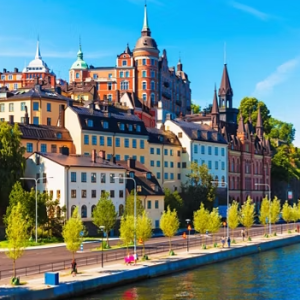
Elegant Stockholm is nestled where Lake Mälaren’s cobalt waters meet the Baltic. This stunning cultural capital extends over 14 islands linked by 57 graceful bridges. Hailed as one of the world’s cleanest cities, it boasts numerous green parks. The well-preserved 13th-century Gamla Stan, or old town, boasts gabled merchant houses and an array of architectural styles, from the enormous baroque Stockholm Palace to the art nouveau Royal Dramatic Theater. Strandvägen is one of Europe’s loveliest waterfront esplanades and the ideal place to sample some traditional smoked salmon.
Day 8: Stockholm, Sweden
Stockholm is an open book for those interested in Swedish culture and history; the city has one of the highest concentrations of museums in the world. The most prominent is the maritime Vasa Museum, which houses the restored 17th-century shipVasa. Other homestead reconstructions are spread across the Skansen open air museum on the isle of Djurgården, providing a glimpse of life before the Industrial Age. Art lovers may also linger among the thousands of paintings and handicraft pieces at the National Museum or admire works by Picasso and Dalí at the Moderna Museet.
Day 9: Tallinn, Estonia
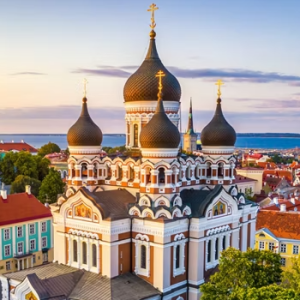
The capital of Estonia, Tallinn is located along the coast of the Baltic Sea. Its well-preserved old town, a UNESCO World Heritage Site, is surrounded by a ring of 17th-century historic fortifications that were built to protect the city from invaders. Inside its walls are the upper town, where the regal castle and the cathedral are located, and the lower town, a maze of merchants’ houses, guilds, churches and public buildings. Some of the most notable landmarks include the Town Hall Square, Alexander Nevsky Cathedral, St. Olaf’s Church and the Kumu Art Museum.
Day 10: Riga, Latvia
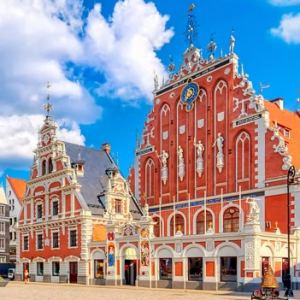
Riga is the largest and most cosmopolitan of the Baltic capitals. Here, medieval meets contemporary in a history and architecture lover’s dream. Vaulting gothic spires and domes of ancient churches dot the narrow cobblestone streets of the UNESCO-listed Old Town, while wide boulevards host striking and ornate examples of stunning Jugendstil Art Nouveau buildings in the new town. Upscale shops mingle with modern art galleries and hip bars, amid innovative, candlelit restaurants, creating a vibrant atmosphere, day or night.
Day 11: Riga, Latvia
A member of the Hanseatic League, Riga has a fascinating history. The heart of its UNESCO-listed Old Town acts as a living museum with its labyrinth of narrow streets and historic squares. The city is home to a diverse population, including sizeable Russian- and Ukrainian-speaking communities, bringing a peaceful blend of customs and languages. Europe’s largest collection of Art Nouveau architecture is found in Riga. The expansion of the city and explosion of the movement during the late 19th century has left a tapestry of magnificent buildings featuring elaborate facades.
Day 12: Klaipėda, Lithuania
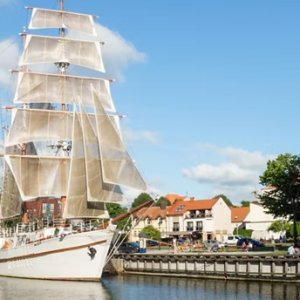
Lithuania’s third-largest city is a historic port on the Curonian coast. Part of the Prussian Kingdom until 1923, when it won its autonomy, Klaipėda is divided by the Danė River, which flows through the city into the Baltic Sea. Along its left bank, the historic old town features cobblestone streets with historic German-style half-timbered houses, street art and a tree-lined promenade filled with cafés. The new town stretches along the Danė’s right bank, past industrial sites and shipyards, amid venues that showcase the city’s art and cultural heritage.
Day 13: Gdańsk, Poland
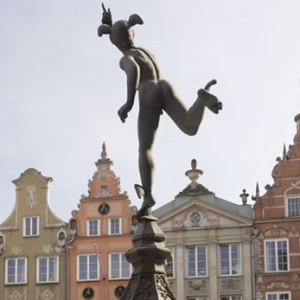
Gdańsk is widely known as the city of glowing amber and Gothic cathedrals. Its luster harkens back to medieval times when it was one of the most prosperous cities in the Hanseatic League, the mercantile powerhouse of the Baltic. The city’s rich history is on display in the remarkably restored old town, a splendid mix of Gothic, Renaissance and Baroque styles—from the royal residence of Green Gate to the 15th-century Artus Court, a merchant’s palace. Traditional Polish pierogies or a glass of Goldwasser, a liqueur created here during the 16th century, round out any visit.
Day 14: Copenhagen, Denmark
Copenhagen’s skyline lies distinctly low to the ground, but some architectural elements soar above all else: the city’s church spires and palace towers. For this reason, the Danish capital is often called the “City of Spires.” Perhaps the most unique, the baroque Church of Our Savior features a spiral stairway that hugs the outside of the steeple. Christian IV’s former stock exchange building boasts a “dragon spire” resembling the entwined tails of four beasts, and the City Hall and Christiansborg Palace strike their own dramatic pose.
Day 15: Copenhagen, Denmark
Bid farewell to your fellow guests and journey home. Or spend more time exploring, perhaps joining one of our extensions.
Price My Trip
Product Code: AAA-Viking_LF
All pricing and offers for accommodations and other non-air travel are per person, based on double occupancy, capacity controlled and subject to availability and change without notice. Pricing does not include taxes, fees, fuel surcharges, gratuities, resort fees, or airfare unless otherwise noted and is valid on new bookings only. Prices, fees, and other restrictions are subject to supplier policies. All offers, including but not limited to, bonus amenities, upgrades, prices, and group benefits are based on select dates, resorts, room categories, and/or fare codes. Specialty pricing may require proper identification. Cancellation penalties, blackout dates, and other restrictions may apply. When traveling outside the United States a valid passport is required. It is the sole responsibility of the passenger to have the proper documentation and identification required by the United States and other governments at the time of travel. When passports are required, it must be valid for a minimum of six months past your date of return. AAA strongly recommends the purchase of Travel Insurance. Usage of a credit card for travel arrangements may provide additional protection, please consult your credit card policies. Under certain circumstances the package price may be subject to supplemental price increases imposed by the supplier. Price increases include, but are not limited to fuel surcharges, taxes or fluctuations in foreign exchange markets that may be imposed after the date of purchase. Air-inclusive prices do not include government imposed taxes and fees, including but not limited to a September 11th Security Fee, U.S. or international government imposed taxes and fees, Federal Excise Fees, among others. Some carriers charge additional fees for checked bags, fuel surcharge, meals, etc. Please check the carriers website for details. Air-inclusive pricing is based on select departure cities. Prices from other cities may vary. AAA Oregon/Idaho acts solely as a sales agent for travel suppliers and is not responsible for the actions or inactions of such suppliers. We monitor all of the information presented on our website; however, we do not assume responsibility for any errors or omissions in the content of the offers displayed. Review full Travel Disclosure and Consent at time of booking.